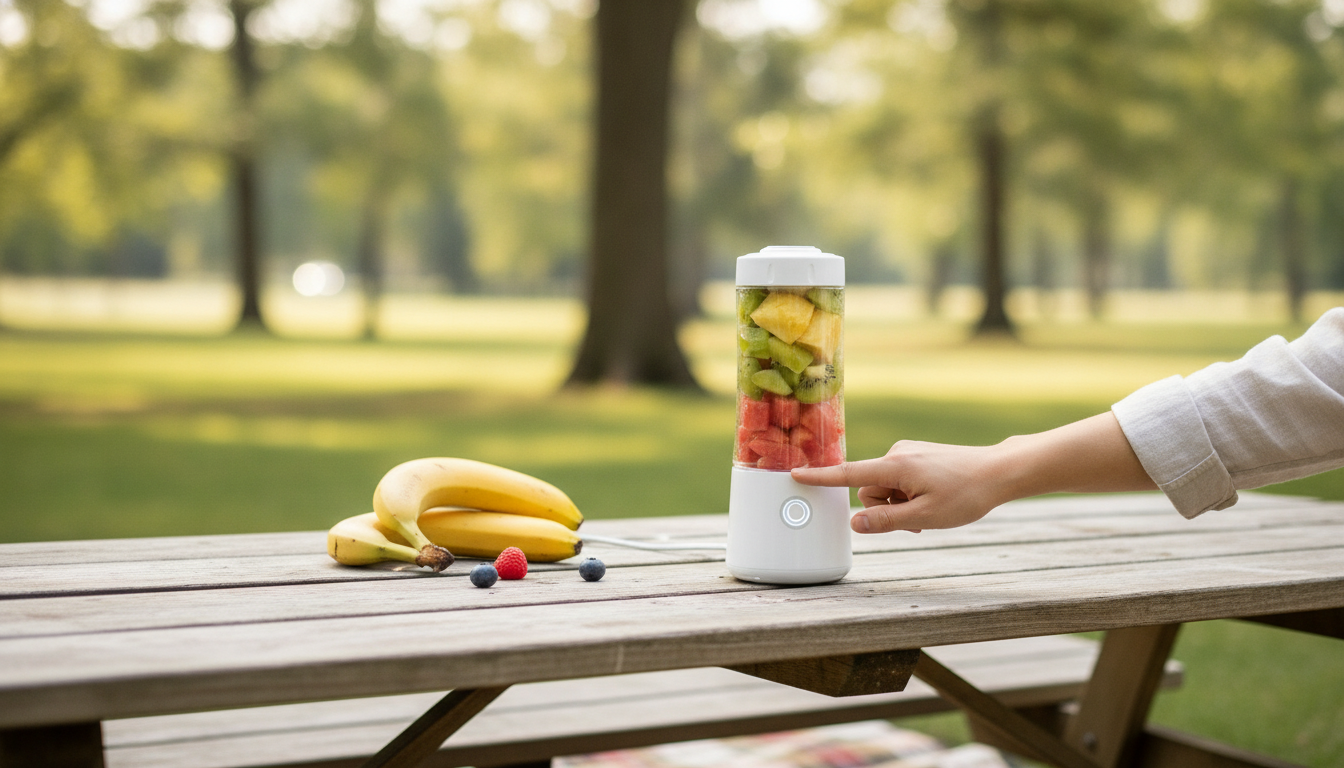
A compact, USB-powered blender can turn fresh fruit into smoothies, shakes, and quick sauces almost anywhere—desk, gym, travel, or a small kitchen. This guide breaks down what to expect from a portable high-speed juicer-style blender, how to use it safely, and how to keep it performing well over time.
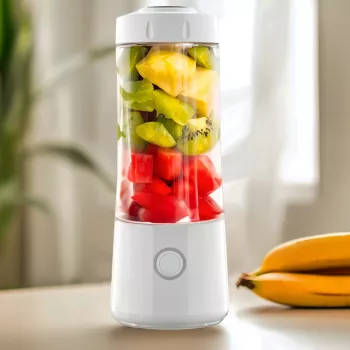
If you’re shopping for a grab-and-go option, the Compact High-Speed Portable Juicer – USB Powered Fruit Blender & Personal Food Processor is built for single servings and quick cleanup—without committing counter space to a full-size appliance.
What This Portable Juicer-Blender Is Designed For
This style of portable blender is all about convenience and small-batch results. It’s designed for single-serve blending—think fruit-based drinks, protein shakes, and quick purees that come together in minutes.
- Great for commuting, office lunches, dorm rooms, camping, and hotel stays.
- Best results come from soft fruits, pre-cut ingredients, and enough liquid to keep everything circulating.
- Useful for small food-processor-style tasks like baby food purees, salad dressings, and light salsas (not heavy dough or large-volume chopping).
Key Features That Matter Day-to-Day
- USB power and rechargeability: easy to top up from a laptop, power bank, or car USB adapter—use a stable, quality charger for reliable charging.
- Compact footprint: simpler to store than a countertop blender, especially in shared kitchens or tight spaces.
- High-speed blending: intended to break down fruit and chilled ingredients; outcomes depend heavily on how small you cut ingredients and how much liquid you add.
- Personal-size cup/jar: encourages portion control and helps avoid leftover waste from oversized batches.
- Simple controls: fewer settings typically means faster setup and less fuss when you’re in a hurry.
Performance Expectations: What Blends Well (and What Doesn’t)
Portable juicer-blenders excel at everyday smoothie ingredients, but they have limits compared to heavy-duty countertop models.
- Blends best: bananas, berries (fresh or thawed), mango, kiwi, soft pears, yogurt, milk alternatives, and protein powder.
- Works well with: leafy greens in smaller amounts when paired with liquid and soft fruit; blend longer and pause to shake if needed.
- More challenging: thick nut butters, large raw carrots/beets, and very fibrous chunks unless pre-cut small and blended with plenty of liquid.
- Not ideal for: hot liquids, boiling soups, heavy dough, or grinding hard dry ingredients like coffee beans.
Smoother texture tip: add liquid first, then soft items, then frozen ingredients last. Cutting fruit into small pieces reduces strain and helps prevent stuck blades.
Battery, USB Charging, and On-the-Go Reliability
How to Use It for Better Results
1) Prep ingredients the “portable” way
2) Load in the right order
3) Blend with a quick, controlled technique
4) Control thickness
5) Upgrade flavor fast
Cleaning and Maintenance for Long-Term Use
For a cleaner, drier countertop after rinsing and recharging, the Quick Drying Diatomaceous Earth Coffee Machine Mat – Absorbent Placemat can help manage water drips around small appliances.
Safety Notes for Portable Blending
- Do not blend hot liquids: steam pressure can force leaks or sudden opening and cause burns.
- Secure sealing: ensure the lid and cup are properly aligned before starting; never run while loose.
- Avoid overfilling: leave headspace so ingredients can circulate—overfilling strains the motor and can lead to leaks.
- Keep charging ports dry: wipe down the exterior after use and charge only when fully dry.
- Food safety: refrigerate perishable smoothies promptly; don’t leave dairy-based drinks at room temperature for extended periods. See USDA guidance on safe refrigeration: USDA: Refrigeration and Food Safety.
Quick Comparison: Portable Blender vs Other Options
Choosing the Right Tool for Daily Blends
| Option |
Best For |
Limitations |
Typical Use |
| USB portable juicer-blender |
Single-serve smoothies, quick purees, portability |
Smaller capacity; needs pre-cut ingredients; not for heavy-duty tasks |
Work, travel, dorm, gym |
| Countertop blender |
Big batches, ice crushing, very smooth textures |
Bulky; needs wall outlet; louder |
Family smoothies, soups, meal prep |
| Shaker bottle / manual mixing |
Protein drinks and simple mixes |
No fruit blending; limited texture options |
Fast post-workout shakes |
Who This Is a Good Fit For
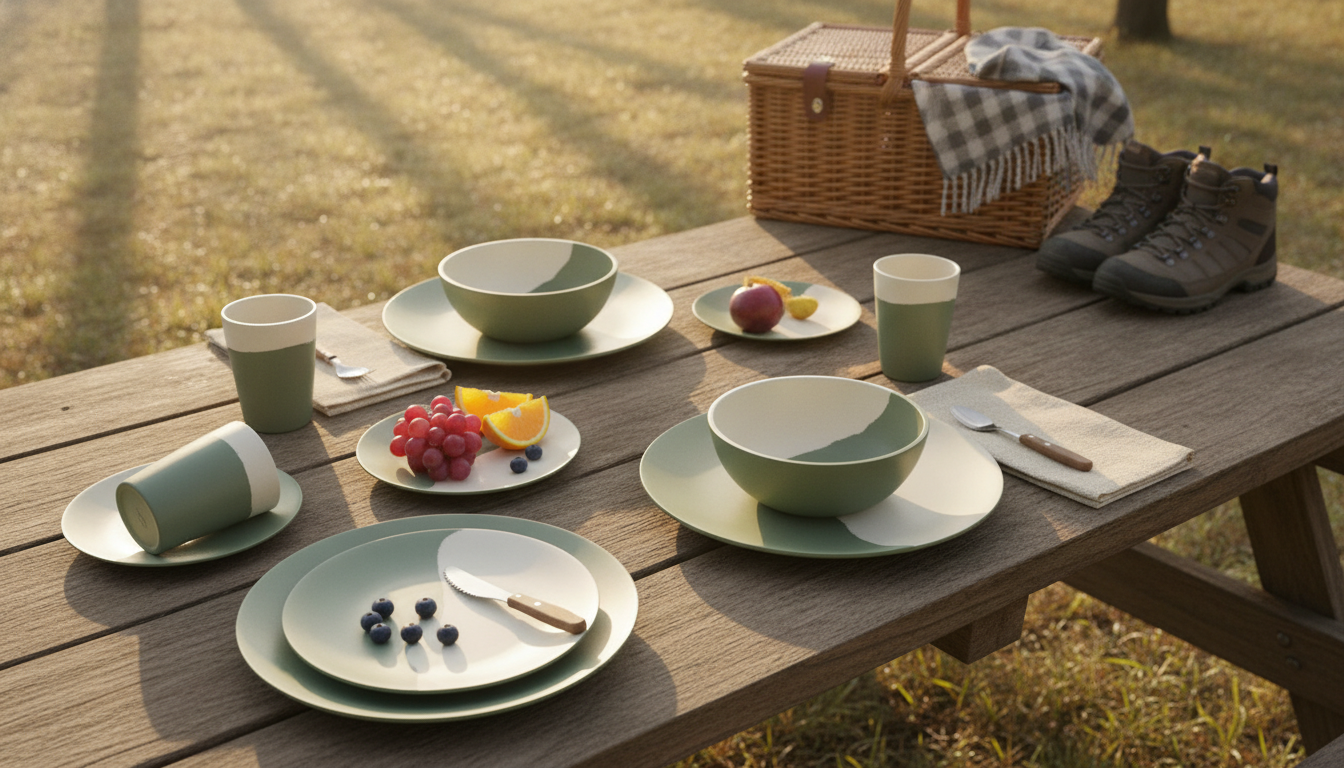
If you’re building a compact kitchen setup, pairing practical small tools with everyday tableware—like the 2pcs Japanese 5-Inch Ceramic Relief Rice Bowl Set – Retro Kiln Change Blue & Green—can make quick meals feel more put together without adding clutter.
Simple Buying Checklist Before Hitting “Add to Cart”
For extra food-safety basics—especially when preparing drinks for kids, older adults, or anyone with a weakened immune system—review: FDA: Food Safety for People with Weakened Immune Systems.
FAQ
Can a USB portable blender crush ice and frozen fruit?
It can handle frozen fruit and ice-like chilled ingredients best when pieces are small and there’s enough liquid to keep things moving. Load liquid first, pulse in short sessions with brief pauses, and shake or swirl between cycles to redistribute—expect less “snowy” crushing than a powerful countertop blender.
How do you clean a portable juicer-blender quickly after a smoothie?
Rinse immediately, then fill the cup halfway with warm water plus a drop of dish soap and run a short blend cycle. Rinse again and air-dry fully; use a bottle brush occasionally for a deeper clean around the cup walls and blade area.
Is it safe to blend hot liquids in a portable blender?
No—hot liquids can create steam pressure that may force leaks or sudden lid movement, increasing burn risk. Let ingredients cool and blend only lukewarm or cold mixtures.
Recommended for you









Leave a comment