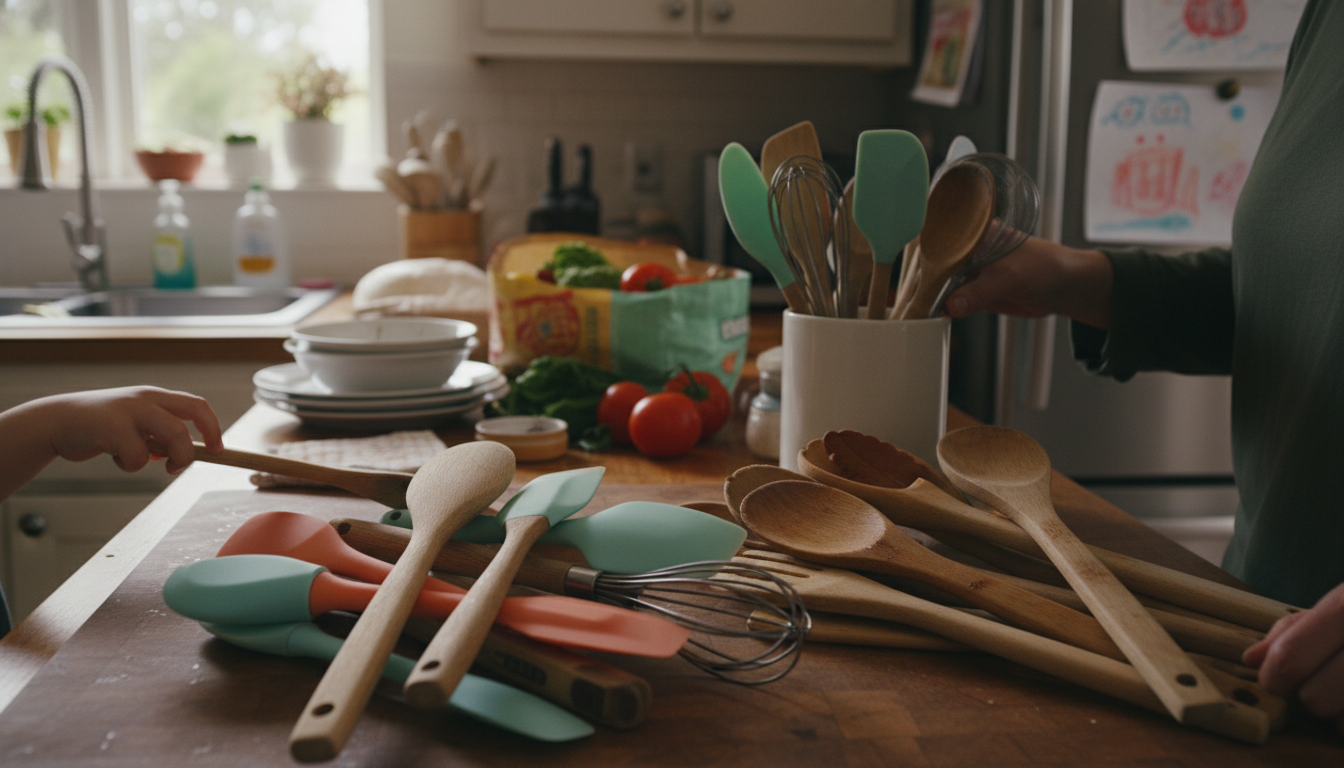
Both silicone and wood utensils can be safe for everyday cooking, but the “safer” choice depends on how they’re made, how you use them, and how well you maintain them. In most kitchens, high-quality, food-grade silicone tends to offer more consistent safety because it’s nonporous and easy to sanitize, while wood can be very safe when cared for properly but is more sensitive to wear and moisture.
Food-grade silicone is nonporous, so it resists absorbing odors, stains, and moisture that can support bacterial growth. It’s also gentle on nonstick cookware and typically handles common cooking temperatures well. Safety hinges on quality: choose utensils labeled food-grade, BPA-free, and heat-resistant, and replace any pieces that become sticky, cracked, or give off strong odors. Low-quality silicone (or silicone blends with fillers) may degrade faster under high heat, which is why buying from reputable brands matters.
Wooden utensils have a long history in cooking and don’t pose concerns about synthetic materials. They’re also less likely to melt if accidentally left near a burner. The main safety downside is that wood is porous. Over time, it can develop grooves, cracks, or rough spots that trap moisture and food residue, making thorough cleaning harder. Wood also requires more careful maintenance: hand-wash promptly, dry completely, and occasionally condition with food-safe mineral oil to reduce drying and splitting.
If low maintenance and easy sanitation are top priorities, high-quality silicone is often the safer day-to-day option. If you prefer natural materials and don’t mind extra care, wood can be equally safe—just retire utensils that splinter, crack, or stay damp. For a deeper comparison (including what to look for when shopping), see the full guide here: https://buttergo.com/which-is-safer-silicone-or-wood-cooking-utensils/.
Look for “food-grade” or “LFGB/FDA-compliant” labeling from a reputable manufacturer, plus a clear heat rating. Avoid utensils with a strong chemical smell, a chalky residue, or surfaces that become tacky after washing or heating.













Leave a comment