
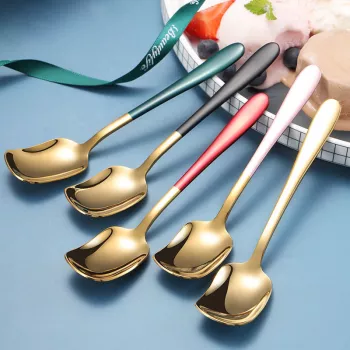
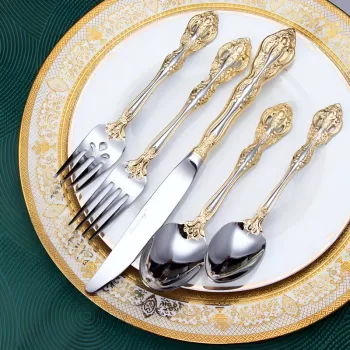
Yes. “Colored stainless steel” typically means stainless steel that has been given a durable surface color treatment rather than being naturally colored all the way through. Stainless steel’s base color is silvery-gray, but manufacturers can add long-lasting hues—like gold, black, rainbow, blue, or rose gold—by finishing the surface in specific ways while keeping the corrosion resistance and strength that make stainless steel popular for flatware and kitchen tools.
PVD (Physical Vapor Deposition) bonds a thin, hard coating to the steel surface. It’s widely used on modern colored flatware because it can deliver vivid color with good wear resistance. Many “gold” or “black” stainless steel spoons and forks are PVD-coated, and the underlying stainless steel remains intact underneath the color layer.
Some items use electroplating to deposit a colored metal layer, or specialized chemical/oxide treatments for certain tones. These can look great, but durability varies by method and by how the item is used and washed.
Quality colored flatware made for dining is designed for food contact. The key is to buy from reputable sellers and look for product details that confirm it’s intended for table use and made from common flatware grades (often 18/10 or 18/8 stainless steel). If you’re shopping for dessert spoons or ice cream spoons with a color finish, you can compare handle shape, coating type, and care tips for longer-lasting shine.
It can, depending on the coating and how it’s treated. To help preserve color, avoid abrasive scouring pads, harsh chemical cleaners, and prolonged soaking. Dishwasher use may be fine for some products, but hand-washing and drying promptly is usually gentler—especially for darker finishes that show micro-scratches more easily.
For a closer look at multi-color options and styling ideas for dessert spoons, visit this guide: https://buttergo.com/guide-5-color-square-head-dessert-spoon-ice-cream/.
Some do, but the finish can last longer with hand-washing. If you use a dishwasher, skip harsh detergents, avoid overcrowding, and remove and dry the utensils soon after the cycle ends.








Leave a comment