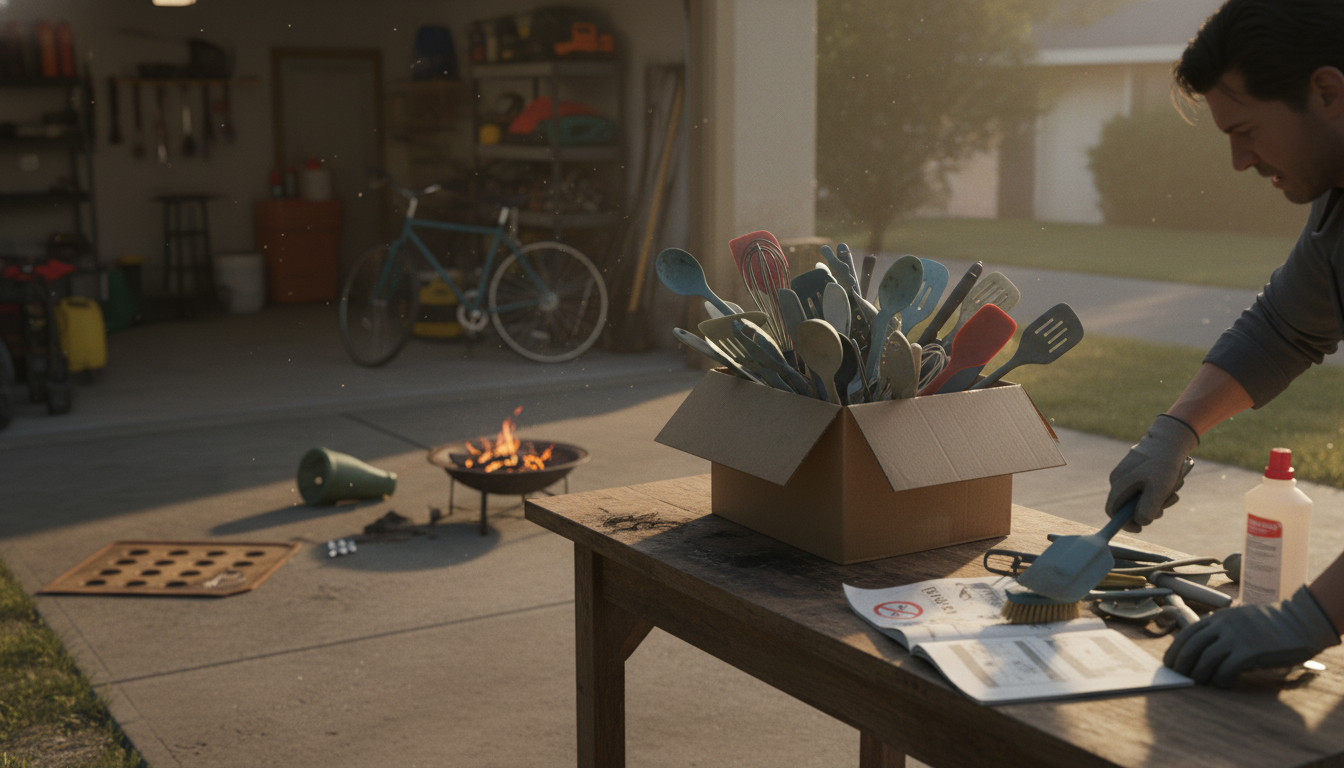
Silicone utensils are popular because they’re flexible, nonstick-friendly, and generally easy to clean. Still, they come with trade-offs that can matter depending on how you cook, how high you crank the heat, and how sensitive you are to odors or texture.
Silicone is slightly porous compared with metal, so it may absorb strong smells from garlic, curry, or fish, and it can sometimes pick up a lingering “dish soap” flavor if washed with heavily scented detergent. Bright sauces can also stain lighter-colored silicone over time, even when the utensil is clean.
Many silicone utensils are rated for high heat, but “high” isn’t unlimited. Leaving a silicone spatula resting on the edge of a hot pan, touching a heating element, or sitting in hot oil can cause warping, softening, or surface damage. At extreme temperatures, silicone can degrade and create unpleasant odors.
Flexibility is great for scraping bowls, but it can be a downside when you need leverage. Thin silicone turners may struggle with heavy burgers, large fillets, or dense dough, and some silicone tongs lack the rigidity of stainless steel for firm gripping and flipping.
Not all silicone is made the same. Lower-quality utensils may have fillers, feel tacky, discolor faster, or develop a chalky surface. Poorly bonded handles can loosen, and seams can trap food, making cleaning harder.
Silicone is usually dishwasher-safe, but grease film can cling and build up, especially on matte finishes. If a utensil has scratches, seams, or a soft outer layer, residue can linger and require extra scrubbing or occasional boiling to freshen it up.
For a deeper breakdown—including how to spot better-quality silicone and avoid common issues—see the full guide here: https://buttergo.com/what-are-the-disadvantages-of-silicone-utensils/.
They’re typically safe up to the manufacturer’s stated temperature rating, but they can still scorch or warp if left in contact with a hot pan edge or burner. For very high-heat searing or open-flame cooking, sturdier tools like stainless steel often perform better.












Leave a comment