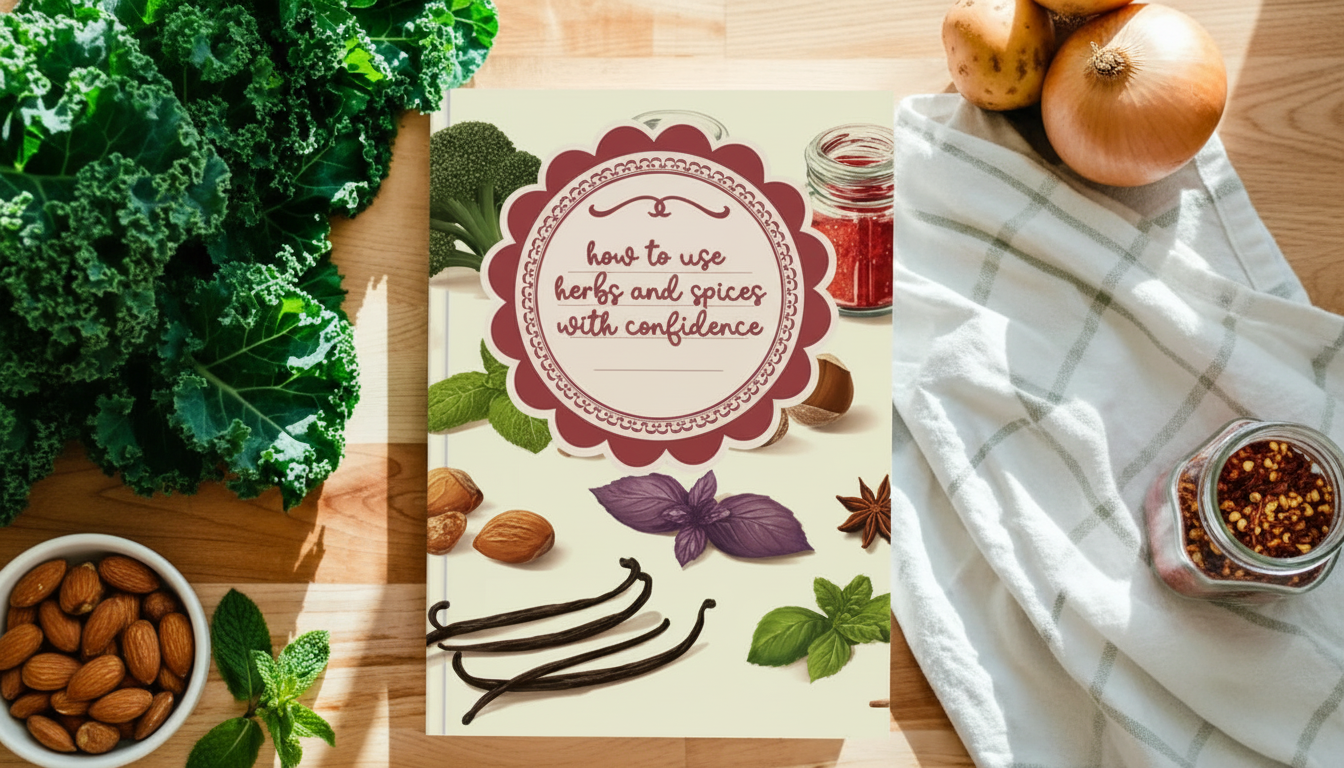
Cooking with herbs and spices gets easier when a few rules guide the process: start with a small, reliable pantry, learn what to add early vs. late, balance salt/acid/fat/heat, and use simple flavor pairings as training wheels. The goal isn’t to own every jar—it’s to repeat a few dependable combinations until they feel automatic, then expand from there.
If you want a step-by-step reference you can keep on your phone, the How to Use Herbs and Spices with Confidence (digital guide) is a quick companion for weeknight cooking, flavor pairing, and AI-assisted inspiration.
Herbs and spices aren’t interchangeable, and knowing their “job” is half the battle. Herbs tend to bring freshness and aroma (think: a clean, green finish). Spices often bring warmth, depth, and intensity (think: toasty, earthy, or smoky body).
It helps to group flavors into easy families you can recognize while tasting:
A reliable training-wheel approach is to pick: 1 main note (the identity), 1 support (rounds it out), and 1 lift (brightens at the end). Example: cumin (main) + paprika (support) + lemon and parsley (lift). Repeat the same trio on different proteins and vegetables—confidence comes from noticing what stays consistent.
| Ingredient type | Add early for | Add late for | Common examples |
|---|---|---|---|
| Whole spices | Toasting and deeper flavor in oil | Rarely (can stay harsh if not bloomed) | Cumin seed, mustard seed, peppercorns |
| Ground spices | Blooming in oil; mellowing bitterness | Brighter top notes (small pinch at end) | Paprika, turmeric, chili powder |
| Hardy herbs | Infusing stews/roasts; savory backbone | Occasionally to refresh aroma | Rosemary, thyme, oregano |
| Tender herbs | Rarely (can dull or turn grassy) | Fresh, clean aroma and color | Basil, cilantro, parsley, dill |
A small, consistent set beats a crowded shelf of faded jars. A solid starter lineup that covers most everyday cooking includes: black pepper, garlic powder, cumin, paprika, chili flakes, cinnamon, oregano, thyme, bay leaves, and coriander.
For general storage guidance and freshness timelines, the USDA FoodKeeper App is a helpful reference.
Adequate salt makes herbs and spices taste more like themselves. If a dish tastes “spicy but flat,” it’s often under-salted, not under-seasoned.
Warm a little oil or butter, add spices for 15–45 seconds until fragrant, then add your main ingredients. This turns powdery flavors into rounder, deeper notes. If you’re worried about burning, lower the heat or bloom after onions soften.
Acid lifts heaviness and helps flavors separate instead of turning muddy. Lemon, vinegar, yogurt, tomatoes, and pickled elements all count—use what matches the dish.
Tender herbs, citrus zest, scallions, or a final tiny pinch of spice at the end creates aroma (what your brain reads as “flavor”). If something tastes dull, try a pinch of salt or a squeeze of acid before adding more spice.
If you want a deeper list of classic combinations to borrow from, the McCormick Spice & Herb Flavor Guide is a handy overview.
Blends make weeknights faster because you’re not reinventing the wheel every time. Mix small batches so they stay aromatic.
A dependable range is 2–5, using a main note (the lead flavor), a support note (adds depth), and a lift (fresh herb or citrus at the end). If the dish tastes flat, fix salt or add a little acid before adding more spices.
Add dried herbs earlier so they have time to hydrate and infuse; add fresh herbs at the end for aroma, color, and a cleaner taste. Hardy herbs can handle longer cooking, while tender herbs usually taste best as a finish.
Give clear constraints (what you’re cooking, method, heat level, and a short list of spices you own) and ask for a timing plan for early, mid, and finishing additions. Keep a personal list of pairings that worked so you can steer future ideas toward flavors you already like.











Leave a comment