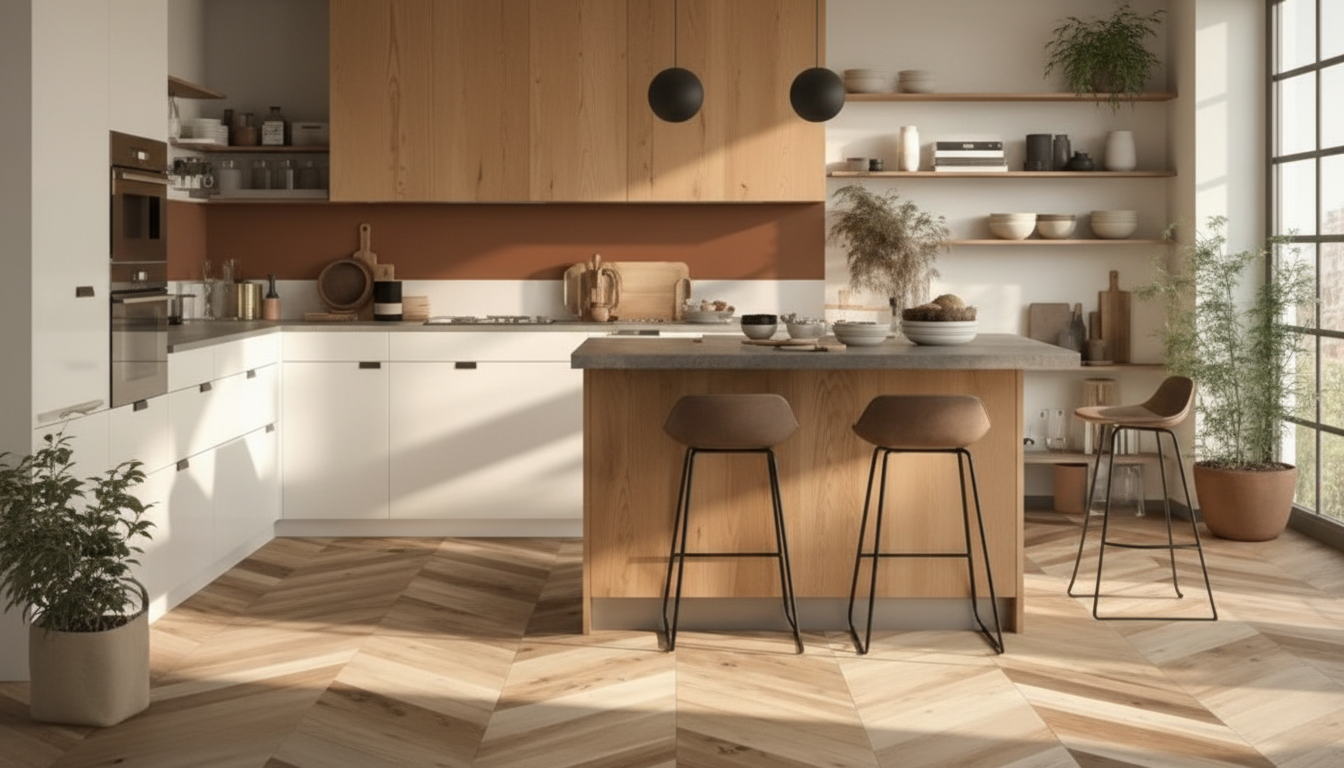
Hardwood in the kitchen can feel inviting, quiet the room visually, and tie cabinetry, counters, and lighting together—if the wood species, finish, and maintenance plan fit real kitchen life. This guide walks through what works, what to avoid, and a simple checklist to move from inspiration to installation with fewer surprises.
Kitchen floors do a lot: they handle foot traffic, chair movement, temperature shifts, and the occasional splash. Hardwood can still be a smart choice because it brings comfort and continuity that hard surfaces sometimes can’t match.
Hardwood performs best when “problem zones” are identified early and managed on purpose, instead of discovered after installation.
Species matters, but construction and finish matter just as much. The best-looking kitchen floor is the one that still looks good on a Tuesday night after cooking, homework, and a few laps from the dog.
| Option | Best for | Watch-outs | Practical tip |
|---|---|---|---|
| White oak (solid/engineered) | High-traffic kitchens; timeless looks | Can still dent with heavy impacts | Choose a matte finish for easier upkeep |
| Maple (solid/engineered) | Clean, bright kitchens; subtle grain | Can show dark marks and uneven staining | Test stain samples under your lighting |
| Hickory (solid/engineered) | Rustic, high-variation spaces | Strong color variation may clash with cabinets | Pair with simpler countertops/backsplashes |
| Engineered oak with thick wear layer | Better stability in variable humidity | Thin wear layers limit refinishing | Verify wear-layer thickness before buying |
| Pre-finished vs site-finished | Pre-finished is faster; site-finished is seamless | Pre-finished has micro-bevels; site-finish needs curing time | For busy homes, pre-finished minimizes downtime |
In kitchens, the “best” finish is usually the one that disguises normal life. That often means less shine, more texture, and a topcoat that fits your schedule.
For ongoing care fundamentals (including what to avoid), the National Wood Flooring Association (NWFA) maintenance guidance is a reliable reference.
If you’re weighing multiple materials (including hybrid and resilient options), it can help to skim an independent comparison like Consumer Reports’ flooring buying guidance to sanity-check durability and maintenance expectations.
If you want a compact, actionable reference, explore: Warm Wood Underfoot That Transforms Your Kitchen | Hardwood Floors in Kitchen Guide, Kitchen Flooring eBook, Interior Design Checklist.
Yes—when spills are wiped quickly, indoor humidity is reasonably stable, and you pick a construction and finish that match your household. It’s a poor fit for kitchens with frequent standing water or consistently tracked-in snow/salt without effective mats and routines.
Matte or satin polyurethane finishes are typically easiest because they hide scuffs and dust better than glossy finishes. Water-based poly stays clearer and cures faster, while oil-based poly ambers over time; light texture can further disguise micro-scratches.
Place absorbent mats at the sink, wipe splashes promptly, and periodically check dishwasher seals and the refrigerator water line. Avoid wet mopping; instead, vacuum grit regularly and use a damp (not wet) microfiber cleaner approved for your finish.











Leave a comment