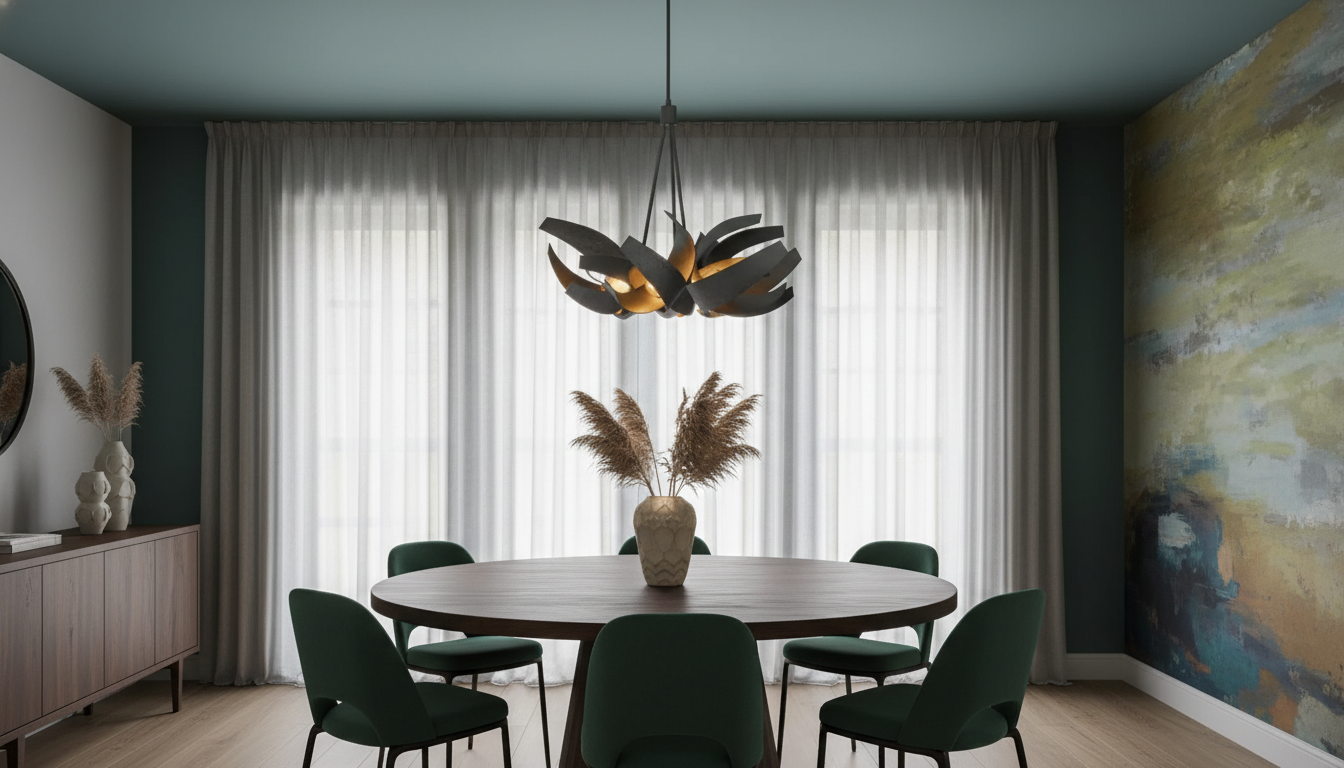
A grand postmodern wrought iron chandelier brings gallery-level presence to a space: bold geometry, dark metalwork, and lighting that reads as both functional and sculptural. The right placement and hanging height make it feel intentional rather than oversized, while thoughtful bulb choices and layered lighting keep the room comfortable day to day. Use the guidelines below to plan sizing, styling pairings, and installation details before the fixture goes up.
Postmodern iron chandeliers are designed to be noticed—even when they’re off. The silhouette becomes a ceiling-level sculpture that frames the room and pulls the eye upward, which is especially helpful in tall spaces that otherwise feel empty overhead.
Wrought iron brings a weighty, architectural character: crisp lines, strong structure, and a matte-to-satin finish that tends to look grounded rather than shiny. Postmodern design adds tension and interest through contrast—structured forms paired with playful proportions, unexpected symmetry, or bold negative space. The result is a fixture that can visually anchor open plans, large dining setups, and rooms with high ceilings that need a focal point.
Center the chandelier over the table and prioritize proportional balance: the fixture should relate to tabletop size and the overall volume of the room. A dramatic iron piece pairs especially well with wood dining tables and simpler table decor that won’t compete overhead.
Use a grand chandelier as a statement on arrival, but confirm clearance for doors, tall guests, and any second-floor sightlines. If your foyer is open to an upper landing, consider how the chandelier reads from above as well as from the front door.
Position the chandelier to define a seating zone, then rely on layered lighting—floor lamps and wall sconces—so the room stays comfortable for reading and conversation. A sculptural chandelier can be the “center of gravity” even in an asymmetrical furniture layout.
Stairwells are made for vertical drama. Plan for viewing angles from multiple landings and ensure the lowest point isn’t in the path of travel. If you’re referencing clearance guidance for accessibility and circulation, the ADA Standards for Accessible Design can be a helpful baseline resource.
Over an island or a round breakfast table, wrought iron adds contrast against stone counters and cabinetry. Balance it with task lighting so the space stays practical—especially for prep zones.
| Location | Common clearance guideline | Notes |
|---|---|---|
| Over dining table | Bottom of fixture about 30–36 in above tabletop | Raise slightly for very tall ceilings or if sightlines feel blocked |
| Open foyer/entry | At least 7 ft from finished floor to lowest point | Higher is often better in high-traffic areas |
| Over kitchen island | Bottom about 30–36 in above countertop | Coordinate with pendants/hood so the space doesn’t feel crowded |
Check base type and maximum wattage, and consider LEDs for lower heat and long life. The U.S. Department of Energy’s LED lighting guide is a solid reference if you’re comparing bulb performance and energy use. If the chandelier uses multiple bulbs, keep shape and finish consistent (all clear, all frosted, or all filament-style) so the fixture reads cohesive rather than patchy. Finally, layer with lamps or sconces so you’re not relying on a single overhead source for every mood.
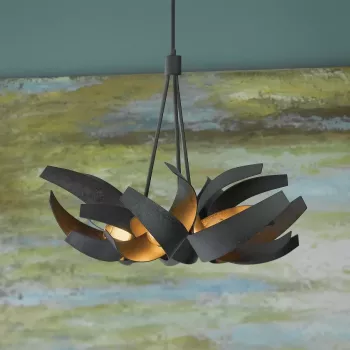
If the goal is a true centerpiece for a large-scale interior, the Grand Postmodern Wrought Iron Chandelier is designed for dramatic impact. Its wrought iron construction delivers a bold architectural look that feels sculptural even in daylight. It’s especially well-suited to anchoring dining rooms, foyers, and living spaces with higher ceilings—just be sure to review specifications and plan mounting height before purchase so it lands at the right visual level.
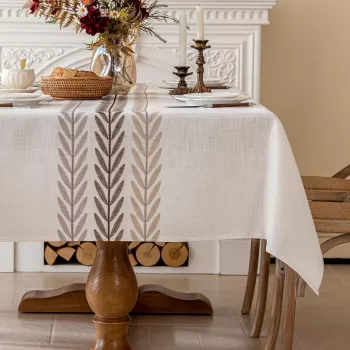
Let the ceiling line stay clean by using wall decor sparingly near the chandelier. Add texture at table level to balance the visual weight overhead—an easy option is the Embroidered Tassel Cotton Linen Tablecloth for Dining & Home Decor, which softens iron’s sharpness with a relaxed, layered look.
To warm up adjacent walls without making the room feel busy, introduce a natural element such as the Rectangular Wooden Wall Hanging Shelf for Plants and Home Décor. A few trailing plants or sculptural ceramics on the shelf can echo the chandelier’s artistic vibe while keeping the overall composition calm. Keep playful accents in supporting roles—think one or two bold pieces rather than many competing statements—so the chandelier remains the hero.
A common guideline is to hang the bottom of the fixture about 30–36 inches above the tabletop. If ceilings are very tall or the chandelier is visually dense, raise it slightly to keep sightlines comfortable.
LED bulbs are typically a great fit for wrought iron chandeliers because they run cooler and last longer. Match the bulb base type and use an LED-compatible dimmer to reduce flicker and get smoother low-level light.
Confirm the ceiling junction box is rated for the fixture’s weight, the mounting bracket is correct, and the ceiling structure can support the load. Also check wiring condition and hire an electrician if reinforcement, new wiring, or high-ceiling installation is involved.










Leave a comment