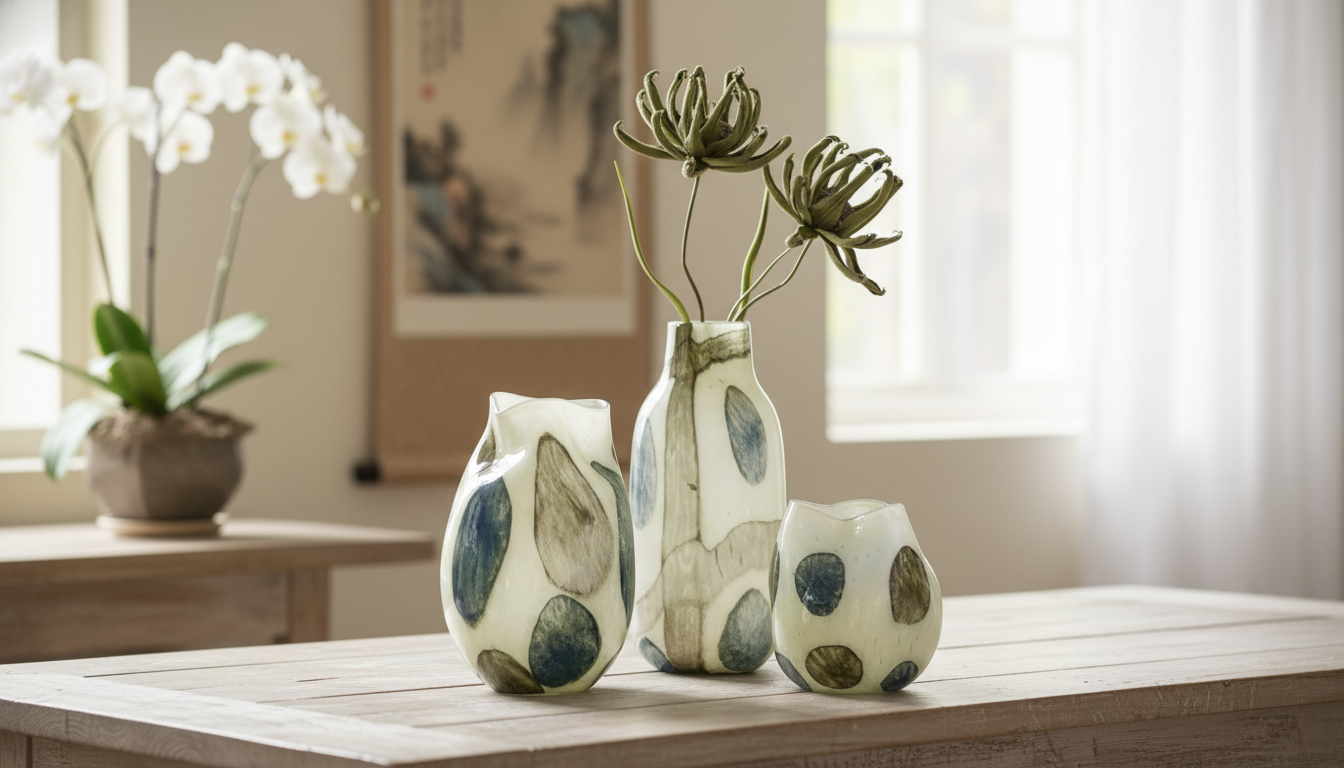
A blue-and-green artistic glass vase brings color, light, and movement to a room even before flowers are added. Inspired by Chinese-style decorative traditions and shaped by hand, this piece works as a sculptural accent on its own and as a refined vessel for fresh stems, dried arrangements, or minimalist branches. If you’re looking for décor that feels calm yet visually alive, the shifting tones of blue-green glass deliver that balance beautifully. For more guidance, see Roses in a China Vase, c.1876 – Pierre-Auguste Renoir – WikiArt.org.
What makes this vase feel Chinese-style
Chinese-style décor often favors harmony: objects that feel composed, intentional, and quietly impressive. This vase leans into that sensibility in a few key ways. For further reading, see Peking Glass – Rosenberg Library Museum.
- Balanced, calm silhouette: The form reads as collected and deliberate on a console, shelf, or sideboard—never fussy, never loud.
- Blue-green transitions: The palette echoes the blue-green tones many people associate with classic glaze traditions and landscape-inspired color stories.
- Decor-first mindset: It’s meant to be enjoyed as an art object, not only as a container for blooms.
- Natural pairing potential: The colors and sheen sit comfortably next to dark wood, lacquer, stone, bamboo, linen, and brass accents.
For a deeper look at the broader context of Chinese art traditions, the Metropolitan Museum of Art’s overview is a helpful reference: Chinese Art (Heilbrunn Timeline of Art History).
Handcrafted glass character: color, light, and variation
Handcrafted glass doesn’t behave like mass-produced décor—and that’s the point. A handmade vase tends to carry small variations that give it presence even when the room is simple.
- One-of-a-kind nuance: Handcrafted glass often shows subtle differences in tone and patterning, so each piece has its own character.
- Light-responsive color: Blue and green hues can shift throughout the day as ambient light changes, making the vase feel dynamic rather than static.
- “Floating” arrangement effect: With glass, stems and water lines become part of the display—especially striking with minimalist florals.
- Decor without flowers: Place it near a window or lamp so highlights and shadows become part of the vignette.
If you enjoy the idea of glass as a material with a long design history, Smithsonian Magazine offers a readable primer: A Brief History of Glass.
Best ways to style it at home
This vase can play either the leading role or a supporting one, depending on how you style it. The blue-green colorway is especially flexible because it can read coastal, modern, zen, or classic based on nearby textures.
- Entryway console: Keep the arrangement low and airy (a few branches or a small bouquet) so the surface stays functional for keys and catchalls.
- Dining table centerpiece: Use a single vase with long stems for a clean look, or keep it empty as a sculptural anchor with candles nearby.
- Bookshelf or wall shelf: Cluster it with a small stack of books and a natural object (stone, wood bead strand) to balance the glass shine.
- Bedroom nightstand: A short arrangement of calming greens or a single bloom keeps the palette quiet and restful.
- Minimalist approach: Display the vase alone and let the blue-green tones do the work—especially effective on dark wood.
Flowers and branches that suit blue-green glass
Blue-green glass gives you a built-in “cool tone” base. That makes it easy to create either a calm, tonal arrangement or a bold contrast that turns the vase into a focal point.
- White blooms: Lilies, roses, and tulips emphasize clarity and contrast against blue-green tones.
- Soft pastels: Blush and pale peach create a gentle gradient that feels tranquil and refined.
- Bold warm colors: Orange and coral pop against cool glass and pull attention to the centerpiece.
- Green-only arrangements: Eucalyptus, ruscus, and ferns lean into a serene, nature-forward look.
- Bare branches: Willow, cherry, or magnolia highlight the Chinese-style inspiration while staying sculptural.
Quick pairing guide
| Look |
Recommended stems |
Placement idea |
| Clean and modern |
White tulips or calla lilies |
Dining table or kitchen island |
| Soft and romantic |
Blush roses + eucalyptus |
Bedroom dresser or vanity |
| High-contrast statement |
Coral peonies or orange ranunculus |
Entry console or living room sideboard |
| Zen and sculptural |
Willow or cherry branches |
Floor-to-shelf vignette near a window |
| Evergreen simplicity |
Ruscus, fern, or dried grasses |
Bookshelf, office desk, or bathroom shelf |
Care and handling for a handcrafted glass vase
Where it fits: room moods and décor pairings
Shop the look: coordinated home accents
A gift that feels personal
FAQ
Can this glass vase be used for fresh flowers with water?
Yes—this style functions as a flower vase for fresh stems with water. For best results, use clean water, change it regularly to prevent residue, and hand-wash the vase between arrangements.
Will a handcrafted glass vase look exactly like the photos?
Not exactly. Handcrafted glass often has slight variation in color patterning and the way it catches light, which is part of the artisanal character and makes each piece feel unique.
How do blue and green vases affect a room’s color palette?
Blue and green tones tend to calm a space and pair naturally with neutrals, wood, and stone. They also create an appealing contrast when you add warm-colored flowers, making the arrangement feel more intentional.
Recommended for you







Leave a comment