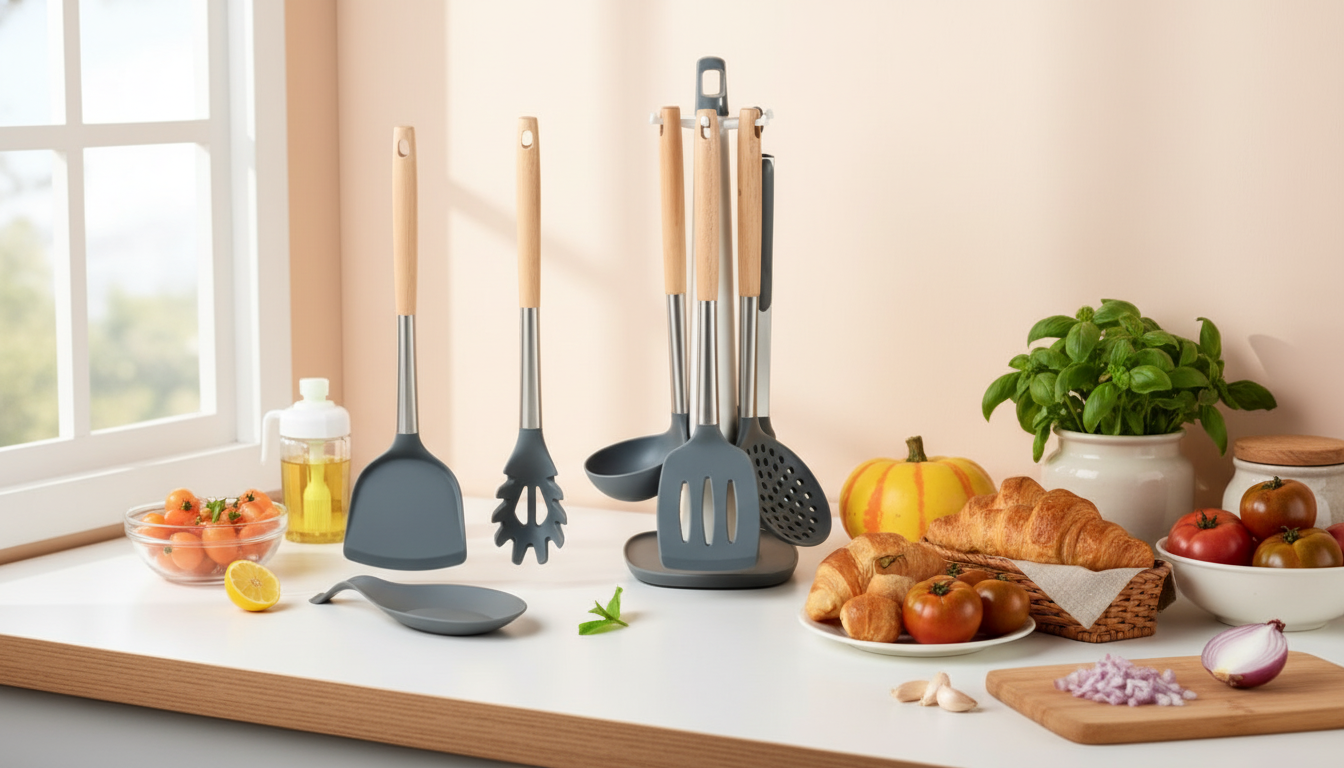
A reliable utensil set keeps cookware protected, food moving smoothly, and hands comfortable during daily cooking. This 8-piece silicone set pairs heat-resistant heads with wooden handles for a practical mix of flexibility, control, and a clean countertop look. If the goal is fewer scratches on pans, less sticking on tools, and a more coordinated setup by the stove, silicone-and-wood utensils are an easy upgrade that fits into everyday routines without changing how you cook.
Small frustrations in the kitchen usually come from tools that don’t match the job—spatulas that melt near hot pan edges, spoons that cling to sauce, or metal tools that leave marks on nonstick surfaces. A heat-resistant silicone utensil set solves many of those pain points at once.
For shoppers who want a single, cohesive refresh, the 8-Piece Heat-Resistant Silicone Kitchen Utensils Set with Wooden Handle keeps the most-used tools consistent—so switching from stirring to scraping to serving feels seamless.
Having a full set matters most when cooking moves quickly. Instead of rinsing the same utensil mid-recipe, you can keep one tool for stirring aromatics, another for scraping batter, and a clean one for serving. Silicone tools are especially helpful for sticky foods—eggs, oatmeal, rice, custards, and thick sauces—where clean edges and good flex reduce waste and make plating neater.
| Tool type | Best for | Why silicone + wood helps |
|---|---|---|
| Spatula/turner | Flipping eggs, pancakes, delicate fish | Flexible edge slides under food while protecting nonstick surfaces |
| Spoon/spoonula | Stirring soups, sauces, grains | Heat resistance helps around simmering pots; silicone minimizes clinging |
| Scraper | Bowls, pans, and jars | Gets more out of batters and sauces with less waste |
| Ladle/serving tool | Serving soups and stews | Gentle on cookware and comfortable for repeated scoops |
| Whisk or mixing tool (if included) | Mixing sauces and batters | Works well in nonstick pans without scratching |
Silicone is popular for food-contact tools because it stays flexible, handles everyday heat better than many basic plastics, and can scrape bowls and pans clean without harsh edges. For an overview of how food-contact materials are regulated in the U.S., the FDA’s resource on Food Contact Substances is a useful reference point when comparing kitchen materials.
In daily use, “heat resistance” isn’t only about high temperatures—it’s about staying dependable when you’re moving between sautéing, simmering, and serving. Silicone’s flexibility also helps when scraping the corners of saucepans or folding batter without leaving pockets of dry flour.
Cookware can be a big investment, and utensils play a quiet role in keeping it looking new. Silicone helps reduce tool marks and the tiny surface scratches that build up over time with harder materials.
Good care keeps silicone fresh and wooden handles looking smooth. Since silicone can hold onto odors if residue lingers, quick cleaning after cooking is the easiest habit to build. For broader guidance on preventing cross-contamination and keeping kitchen tools sanitary, the USDA FSIS Kitchen Food Safety page is a helpful baseline.
To round out a kitchen refresh visually, consider pairing functional tools with simple decor pieces like the Embroidered Tassel Cotton Linen Tablecloth for Dining & Home Decor or a playful accent like the Cartoon Chef Kitchen Wall Sticker – Fun Self-Adhesive Mural for Home & Restaurant Decor. A cohesive space tends to feel more inviting—especially when the countertop isn’t crowded with mismatched, worn-out tools.
Kitchen-grade silicone is commonly used for food-contact utensils and bakeware. Follow the maker’s care guidance, keep utensils away from direct flame, and replace any tool that becomes damaged, sticky, or degraded.
Silicone is generally gentler than metal and is widely used to help protect nonstick coatings. Avoid using any utensil to cut or chop directly in the pan to keep the coating in good shape.
Hand-wash and avoid long soaking; then dry promptly to help preserve the wood. If the handle looks dry over time, a small amount of food-safe mineral oil can help maintain its finish.











Leave a comment