AI Meal Themes That Make Weeknights Easier
Weekly meal themes turn daily “what’s for dinner?” decisions into a simple rhythm. With AI, themes can adapt to your schedule, budget, leftovers, and preferences—so cooking feels lighter, grocery trips are faster, and meal prep becomes more consistent.
Why meal themes reduce stress (and food waste)
- Fewer decisions: One theme per day narrows choices without feeling repetitive. “Sheet-pan night” can still mean chicken, salmon, tofu, or sausage—just in the same easy format.
- Better use of ingredients: Themes encourage planned overlap (herbs, sauces, proteins) across multiple meals, which helps you finish produce before it wilts.
- Smoother prep: Batching one component (a grain, roast veggies, or a protein) supports multiple theme nights, so the next meal is halfway done.
- Easier household coordination: Themes set expectations and simplify sharing cooking duties—someone can handle toppings, another cooks the main, another plates.
As a bonus, themes make it easier to balance meals across the week. If Monday is veggie-forward, Tuesday can be higher-protein, and a soup night can help you use up odds and ends. For broad nutrition guidance, resources like USDA MyPlate and the Healthy Eating Plate can help you keep the week varied without tracking every bite.
What AI can do for weekly meal planning
- Build a theme calendar around real life: Put fast themes on busy nights and more flexible recipes on nights when you can cook.
- Generate recipe ideas that match your needs: High-protein, gluten-free, dairy-free, kid-friendly, beginner-level—without starting from scratch every time.
- Create a smart grocery list: Group items by store section, reduce duplicates, and prioritize multi-use ingredients.
- Suggest leftover “bridges”: Taco-night chicken becomes a salad topper, wrap filling, or stir-fry protein—planned, not accidental.
- Adjust portions: Scale recipes to household size and planned lunches so you’re not cooking “random extra” or coming up short.
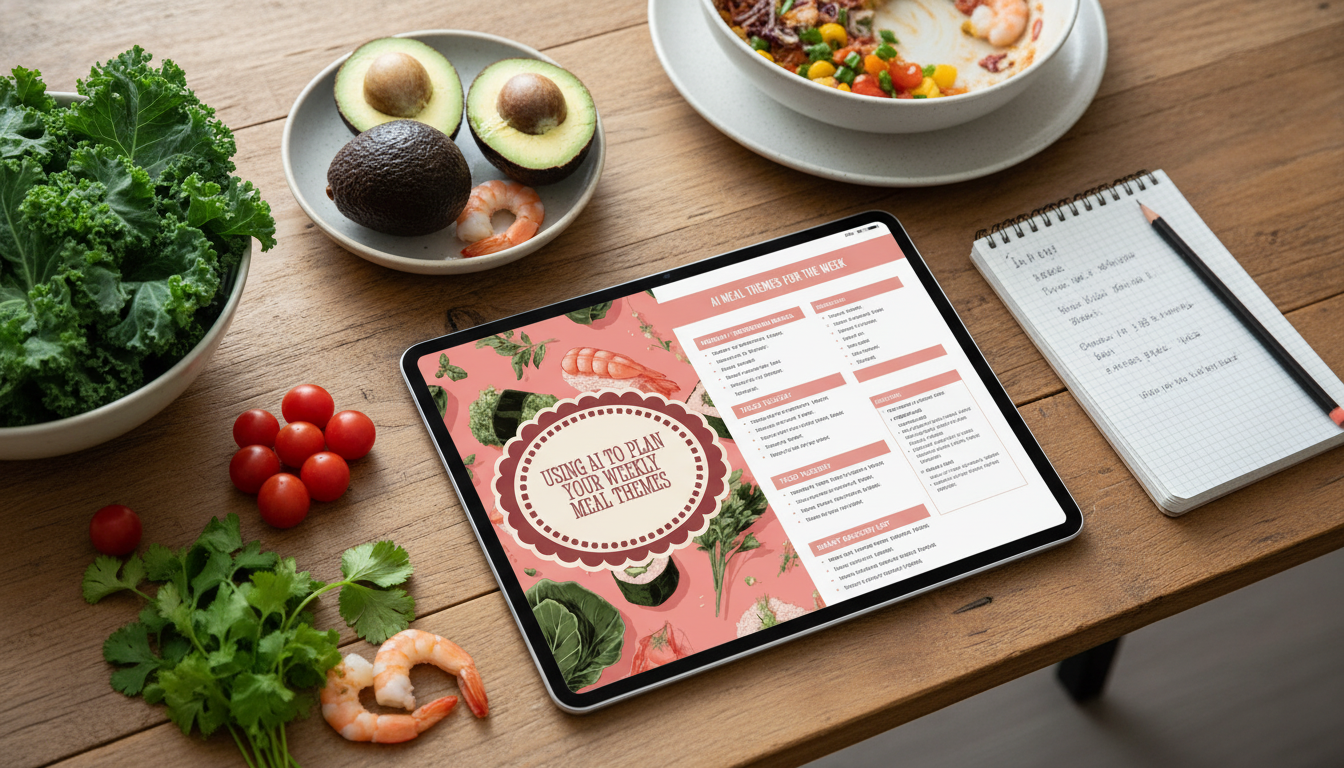
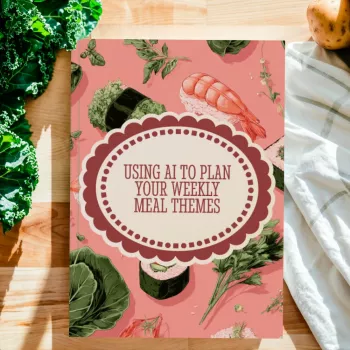
If you want a structured system you can reuse week after week, the Using AI to Plan Your Weekly Meal Themes (digital guide) is a handy reference for going from themes to recipes to prep to groceries with fewer loose ends.
Set up your preferences once for better theme suggestions
AI works best when it has clear guardrails. A one-time “house profile” keeps your theme suggestions realistic and repeatable.
- Household basics: Number of people, typical appetite, lunch needs, and snack habits.
- Nutrition guardrails: Allergies, intolerances, macro goals, sodium limits, and any must-have foods (or absolute no-gos).
- Time reality: Pick 2–3 “quick nights” (20–30 minutes) and 1 “batch-cook night” so the plan fits your week.
- Budget and shopping style: One big shop vs. two smaller shops; pantry-first vs. fresh-first; how often you’re willing to buy specialty items.
- Flavor lanes: Choose 4–6 cuisines or ingredient families that reliably work in your home (Tex-Mex, Mediterranean, classic American, noodle bowls, etc.).
A sample week of AI-friendly meal themes
Use this as a starting template, then rotate themes weekly to prevent boredom. Aim for two overlap ingredients per week (like spinach + chicken, or tortillas + beans), and protect your schedule with one flex night for leftovers or takeout.
Example weekly meal themes with prep and grocery focus
| Day |
Theme |
Fast prep idea |
Smart overlap ingredient |
Grocery planning note |
| Mon |
Sheet-Pan Night |
Chicken + vegetables + quick sauce |
Lemon / garlic |
Buy extra veg for Wed stir-fry |
| Tue |
Taco Bowl Night |
Rice + beans + toppings bar |
Cilantro / salsa |
Choose one versatile protein for 2 meals |
| Wed |
Stir-Fry Night |
Veg + protein + bottled or homemade stir-fry sauce |
Bell peppers |
Get a frozen veg backup for busy weeks |
| Thu |
Pasta or Noodle Night |
One-pan pasta with greens |
Spinach |
Pick a sauce that also works as a dip/spread |
| Fri |
Build-Your-Own Night |
Wraps, salads, or grain bowls |
Greek yogurt / ranch base |
Plan toppings to use up leftovers |
| Sat |
Batch-Cook Night |
Chili, curry, or roast protein |
Onions |
Cook extra portions for lunches |
| Sun |
Soup + Sandwich Night |
Blended veg soup + toastie |
Carrots / celery |
Use remaining produce before the next shop |
Turn themes into a grocery list that actually works
To make the kitchen feel more “ready” for consistent cooking, small environment tweaks help too—like adding a playful focal point with the Cartoon Chef Kitchen Wall Sticker, or creating a dedicated spot for spices, oils, and prep bowls using a Rectangular Wooden Wall Hanging Shelf.
Meal prep that supports themes without taking over the weekend
- Prep two building blocks: For example, roast chicken + cooked rice, or a sauce + chopped vegetables. Two components can unlock four dinners.
- Do a 30–45 minute reset: Wash greens, chop onions, roast a sheet pan of mixed vegetables, and portion snacks.
- Label and date leftovers: Make flex night effortless and safer. For food safety basics and timelines, consult the USDA FSIS leftovers guidance.
- Keep one versatile sauce base: Yogurt-herb, tomato, or sesame-soy can stretch across bowls, wraps, pasta, and salads without tasting identical.
A simple way to keep the system consistent
FAQ
Do weekly meal themes work for picky eaters?
Yes—themes create controlled variety: the format stays familiar while fillings and toppings change. Add one “safe option” to every meal (like plain rice, fruit, or a simple protein), and use build-your-own nights so everyone can customize without extra cooking.
How many theme nights should be scheduled versus leftovers?
A practical baseline is 4–5 planned theme dinners, plus 1 flex night and 1 leftovers night. Larger households or families that rely on lunches may shift toward more batch-cook and leftovers to reduce cooking frequency.
What information helps AI create better meal themes?
Share your time limits per night, budget range, dietary needs, kitchen equipment, favorite cuisines, disliked ingredients, and how often you shop for groceries. The clearer the constraints, the more usable the themes and the less last-minute scrambling.
Recommended for you









Leave a comment