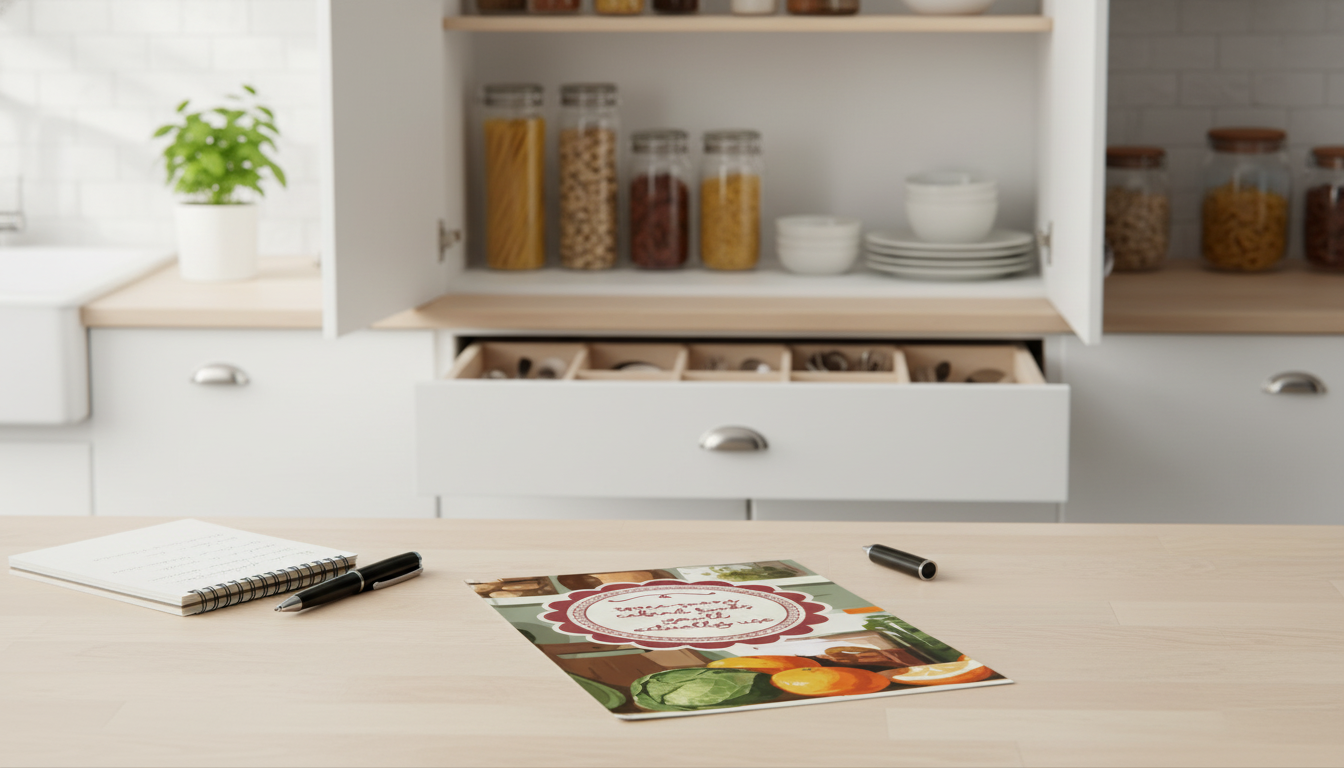
Crowded cabinets usually come down to a few fixable issues: wasted vertical space, hard-to-reach back corners, and “miscellaneous” items with no assigned home. The best upgrades focus on quick wins first, then simple systems that keep an organized kitchen from drifting back into clutter—finished off with a printable checklist to make follow-through easy.
If you skip the reset, organizers become expensive “stuff shufflers.” This quick pass clears the friction points so every bin, riser, and label actually helps.
For food freshness guidance while you’re sorting, the USDA FoodKeeper timelines are a helpful reality check. For cleaning basics, follow the CDC’s household cleaning guidance, especially if you’re resetting after a spill or pests.
Most cabinets waste height. Fixing that is usually the cheapest, fastest “wow” upgrade.
| Hack | Best cabinet spot | What it fixes | Quick tip |
|---|---|---|---|
| Shelf riser | Plates/bowls cabinet | Wasted headroom | Measure shelf height first so stacks still clear the door frame |
| Under-shelf basket | Snack or wrap cabinet | Loose bags and flat packs | Don’t overload; keep it to lightweight items |
| Vertical dividers | Bakeware cabinet | Chaotic stacks of pans | Place heaviest items closest to the cabinet sides |
| Stackable bins | Pantry cabinet | Small items getting lost | Keep one bin per category and label the front edge |
| Pull-out tiered shelf | Spices/condiments cabinet | Back items disappearing | Group by cooking style (everyday, baking, specialty) |
The back of a cabinet shouldn’t be a punishment zone. The goal is to pull items forward in one motion—like you’re using a drawer, not a cave.
Zones beat “perfect” layouts. When items live where you actually use them, putting things away stops feeling like a chore.
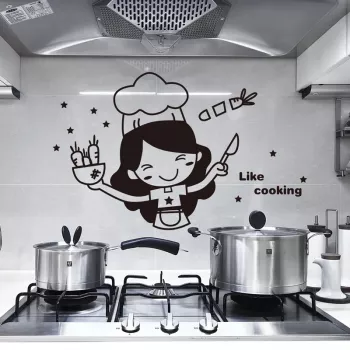
If your kitchen feels visually busy even after zoning, a small decor cue can help reinforce “where things go.” A playful option is the Cartoon Chef Kitchen Wall Sticker – Fun Self-Adhesive Mural for Home & Restaurant Decor, especially near a coffee or prep corner.
Need more “up and out” storage beyond the cabinet boxes themselves? A wall-mounted option like the Rectangular Wooden Wall Hanging Shelf for Plants and Home Décor can hold lightweight overflow items (tea canisters, cookbooks, labeled jars) while keeping counters clearer.
| Task | Done |
|---|---|
| Empty one cabinet and sort into keep / relocate / discard | ☐ |
| Wipe shelves, corners, and door edges | ☐ |
| Measure shelf height and depth before buying organizers | ☐ |
| Add one vertical-space helper (riser, basket, dividers) | ☐ |
| Add one access helper (bin, turntable, pull-out tray) | ☐ |
| Create a clear zone label for each category | ☐ |
| Place daily items in the prime zone (waist to eye level) | ☐ |
| Set a backstock spot for duplicates and bulk items | ☐ |
| Do a 1-minute tidy after unloading groceries | ☐ |
If you want a ready-to-print version you can keep in a binder or tape inside a cabinet door, use Printable checklist: Space-Savvy Cabinet Hacks You’ll Actually Use.
Prioritize vertical space (a shelf riser or under-shelf basket) and improved reach (handled bins or a turntable). Together, they solve the most common problems—wasted height and items disappearing in the back—within minutes.
Clear zones and labels keep everyone putting things back in the same place, and a tiny routine prevents drift. Put groceries directly into the right bin/zone, maintain one backstock spot for duplicates, and do a 10-minute monthly reset.
Matching containers can improve efficiency and reduce wasted space, but it’s optional. The bigger win is choosing square or stackable shapes, using consistent labels, and picking bins that pull out like drawers.









Leave a comment