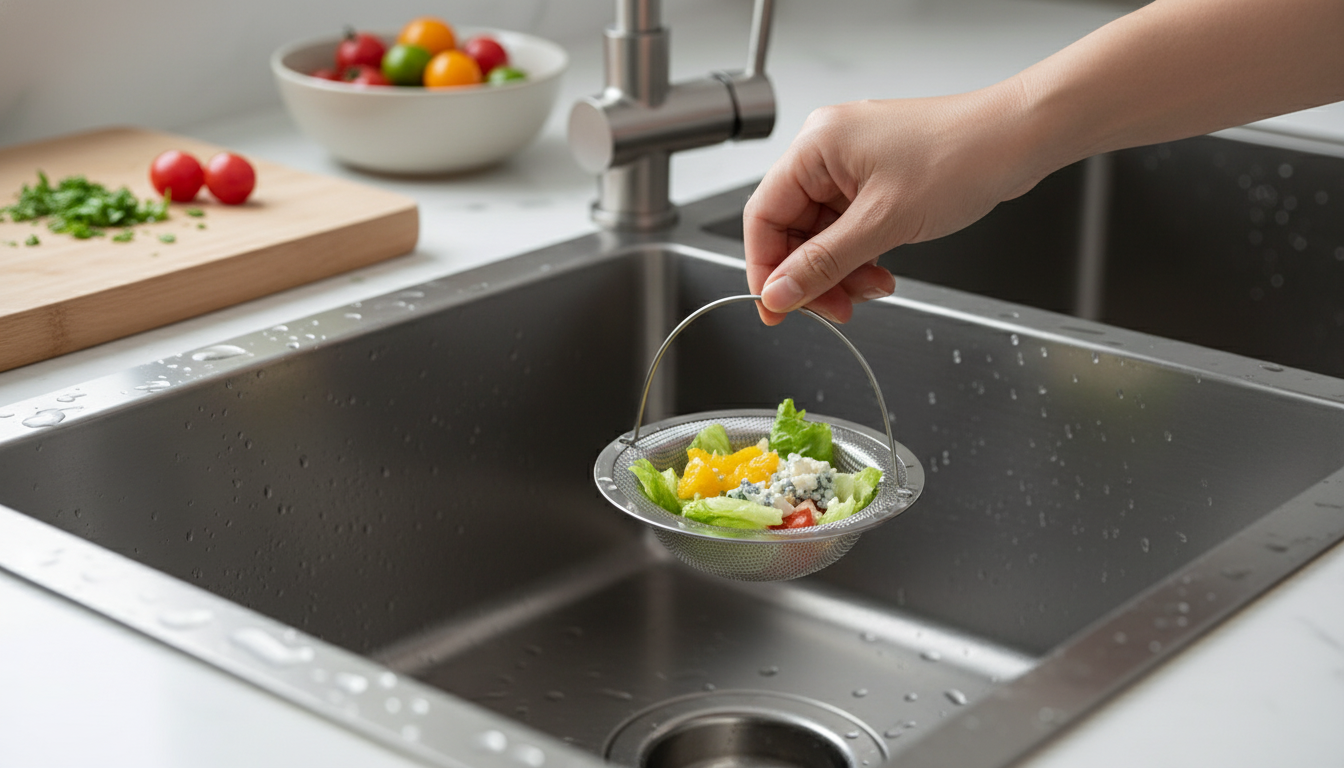
A reliable sink strainer keeps food scraps out of the drain, reduces clogs, and makes cleanup faster. A stainless steel drain basket with a handle adds an easy lift-and-dump routine, helping keep the sink flowing freely with less mess and fewer odors. For busy kitchens—whether it’s weeknight dishes, meal prep, or rinsing produce—this small insert can make the sink feel easier to manage day after day.
A drain basket replacement is designed to sit in the sink’s drain opening and catch the everyday debris that causes slow drains over time. The handle is the simple upgrade that changes how it feels to use: instead of pinching edges or reaching into a wet drain area, you lift, dump, and rinse in one motion.
Keeping scraps out of the plumbing is a practical prevention step that pairs well with basic drain-friendly habits recommended by public agencies and home maintenance guidance, such as avoiding grease buildup and keeping flow paths clear (see the EPA for broader household water and plumbing best practices).
Not all strainers feel the same in daily use. The best options focus on durability, easy handling, and a hole pattern that drains quickly while still catching the scraps that matter.
Stainless steel is also straightforward to maintain with the right care routine; for material-specific guidance, SSINA’s stainless steel care and cleaning notes are a helpful reference: Specialty Steel Industry of North America (SSINA).
Most “it doesn’t sit right” sink strainer problems come down to sizing or drain type. Before ordering a replacement, confirm what you have and how the new basket will seat. A good fit should sit flat, drain quickly, and lift out without snagging the faucet base or nearby accessories.
| Check | What to Measure/Confirm | Why It Matters |
|---|---|---|
| Top diameter | Measure the widest rim of the existing basket/insert | Ensures the basket rests properly and doesn’t fall through |
| Basket depth | Measure from rim to bottom of basket | Affects debris capacity and how it seats in the drain |
| Perforation pattern | Look at hole size and spacing | Controls how well it catches scraps while keeping flow strong |
| Handle clearance | Lift the handle and check space around faucet/backsplash | Prevents snagging and makes removal easier |
| Drain type | Standard sink strainer vs. disposal drain opening | Avoids mismatch and poor seating |
Replacing a drain basket insert is typically a no-tools change. The goal is simply to remove the old insert, clean the seating area, and confirm the new one sits stable under running water.
A handle basket is at its best when it’s treated like a quick, repeatable routine—emptying takes seconds, and that’s what keeps buildup from starting.
For kitchens that handle a lot of raw ingredients, basic hygiene matters too—especially when rinsing produce or cleaning up after prepping meats. The CDC’s food safety guidance offers practical reminders for keeping kitchen surfaces and tools cleaner as you work.
Not always. Fit depends on the drain type (standard sink strainer vs. disposal opening) and the basket’s diameter and depth, so it’s best to measure your current insert and confirm it sits flat with enough handle clearance.
Empty it after each use and give it a quick rinse daily. A deeper scrub is only needed when you notice residue in the holes, a film on the underside, or lingering odor.
Many stainless steel strainers can handle dishwasher cleaning, but rinsing off food scraps first helps prevent debris from re-depositing. Place it securely so it doesn’t flip during the cycle and check any care notes for the specific finish.












Leave a comment