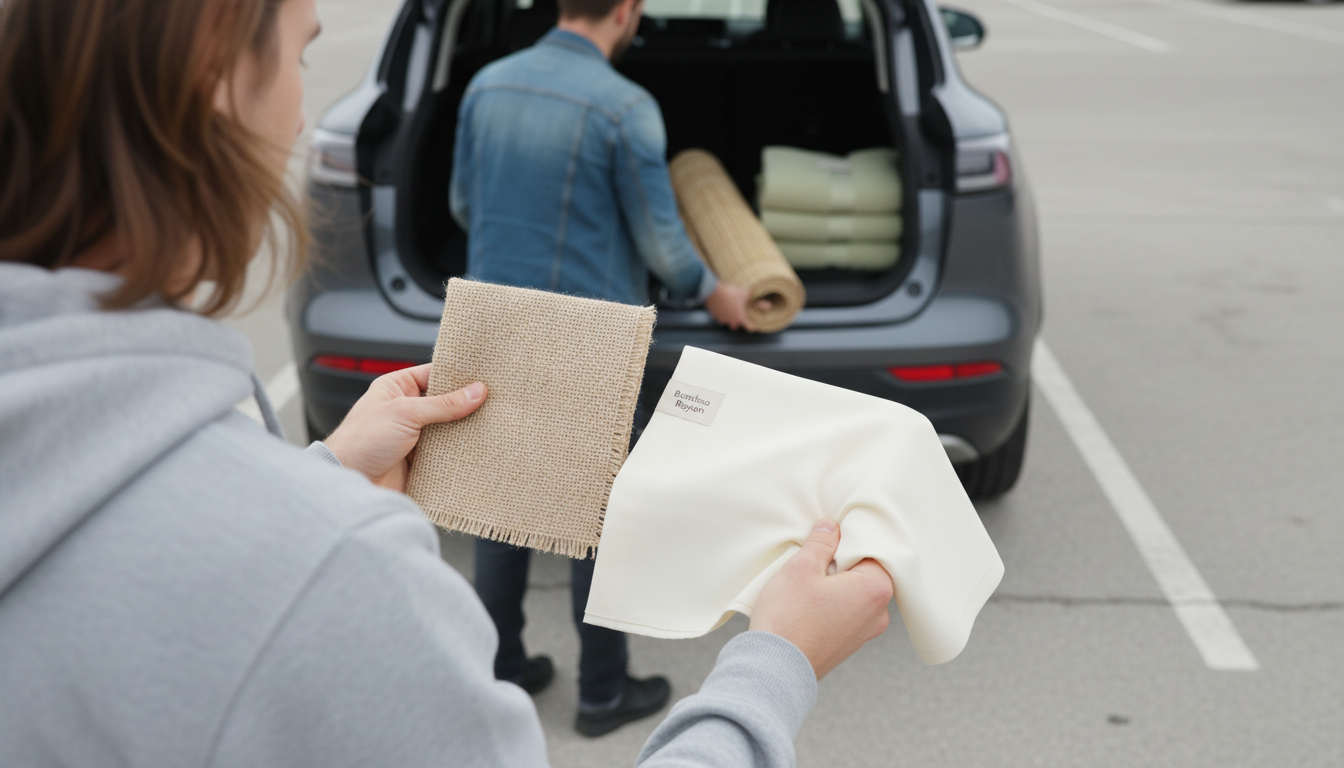
Bamboo is the plant itself—fast-growing grass that’s harvested and used as a raw material. Bamboo fiber is a processed material made from that plant and turned into threads, fill, or fabric. In other words, bamboo is the source; bamboo fiber is what you get after the source is broken down and manufactured into a usable textile ingredient.
Once bamboo stalks are harvested, they can be processed in different ways to create “fiber.” The processing method matters because it changes the feel, performance, and sometimes the labeling of the final product.
This approach physically crushes bamboo and uses natural enzymes to separate fibers, which are then spun into yarn. It tends to produce a more textured, linen-like fabric and is generally less common because it can be more labor-intensive and costly.
Many bamboo fabrics on the market are made by dissolving bamboo cellulose and regenerating it into filaments. These are typically sold as bamboo viscose or bamboo rayon. The resulting fabric is usually smooth and soft, but it’s more accurate to think of it as a regenerated cellulose fiber rather than “raw” bamboo.
Product descriptions can be confusing because “bamboo” is often used as shorthand for a bamboo-derived textile. Looking for terms like “bamboo viscose,” “bamboo rayon,” or “bamboo linen” helps clarify what you’re actually buying. The source plant may be bamboo, but the finished fiber’s characteristics—softness, drape, breathability, and care requirements—depend heavily on the manufacturing route.
For a deeper breakdown of terminology and what to look for on labels, visit https://buttergo.com/what-is-the-difference-between-bamboo-and-bamboo-fiber/.
Bamboo viscose is a type of bamboo-derived fiber made through a chemical regeneration process. It’s often marketed as “bamboo fiber,” but the more precise label is viscose or rayon made from bamboo cellulose.









Leave a comment