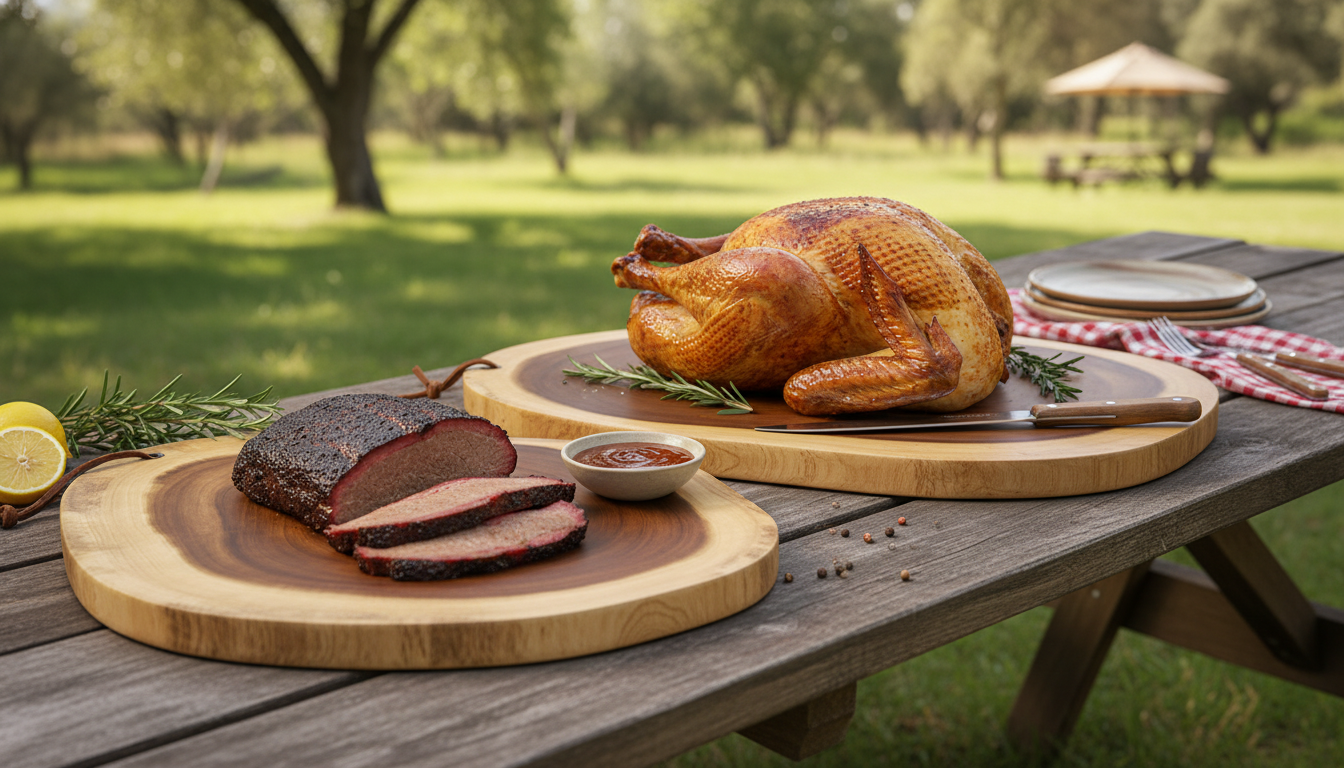
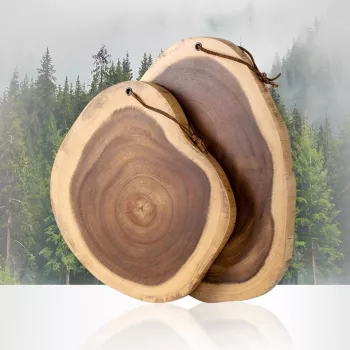
A solid carving board makes messy jobs—brisket slicing, rib prep, and holiday turkey carving—cleaner and safer. This round acacia butcher block is designed to handle hot-off-the-smoker meats, catch juices, and provide a stable, knife-friendly surface that looks right at home on the counter or serving table.
When the main course is big, hot, and dripping, the cutting surface matters as much as the knife. A round butcher-style board is especially handy for high-traffic meals where carving happens fast and serving follows immediately.
For a dedicated meat station, pair your board with a carving knife, an instant-read thermometer, and a clean towel underneath for extra grip on slick outdoor tables.
Acacia is a dense hardwood with a tight structure that performs well when you’re working with heavy cuts and repeated slicing. It offers a balance: tough enough to stand up to frequent use, yet more forgiving to knife edges than ultra-hard surfaces.
Food safety still comes down to cleaning and drying habits. For general guidance on board hygiene and cross-contamination, see the USDA Food Safety and Inspection Service cutting board recommendations.
The round format isn’t just about looks. It changes how you carve and serve—especially when you’re working around a crowd or tight prep space.
That rotation advantage is especially noticeable with brisket: keep your slicing angle consistent by turning the board a few degrees at a time, rather than pulling the whole packer around and smearing the bark.
Not all wood boards feel the same once you add heat, fat, and pressure. For carving jobs, the best boards focus on control: control of juice, control of the knife path, and control of slipping.
| Task | What Helps Most | Why It Matters |
|---|---|---|
| Turkey carving | Juice groove + stable base | Keeps drippings contained and reduces slipping while carving |
| Brisket slicing | Large clear surface + easy rotation | Supports long slices and consistent cutting angles |
| Rib prep | Thickness + durability | Handles heavy chopping and trimming without flexing |
| Serving BBQ | Attractive grain + round presentation | Doubles as a serving board for family-style meals |
Wood boards last longest when they’re cleaned quickly, dried fully, and oiled before they look “thirsty.” A few small habits prevent most warping, odors, and surface roughness.
For cleaning and sanitizing fundamentals (including concentrations and best practices), the FDA Food Code is a useful reference point.
Yes. Clean promptly with hot soapy water, sanitize after raw meat use, and dry fully; using a separate board (or separate side) for ready-to-eat foods helps prevent cross-contamination.
Oil whenever the surface looks dry or feels rough. For frequent meat and BBQ use, weekly oiling is a good starting point, then adjust based on how often you wash it and your indoor humidity.
Scrub the surface with coarse salt and lemon (or a baking soda paste), rinse quickly, and dry upright. Once fully dry, re-oil to restore the board’s protective finish.








Leave a comment